Volunteers to the rescue
This top section of the gully, after being used as a sawmill in the 1930s, was extensively grazed by cattle in the 1960s and 70s, and cleared of trees.
Dedicated efforts to revegetate this section of the gully and bring it back to life began in 2008 with our Friends group, volunteers and local school children.
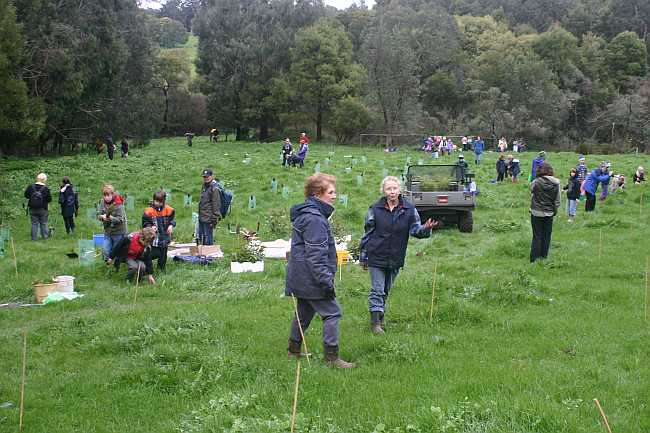
Look closely at the spacing and size of the trees, and you will notice that there is a mix of species, quite closely planted. How even is the spacing here? You might like to think about what sort of polka dot pattern the trunks would make. You may also start to see tracks made by animals through the undergrowth, and tiny seedlings like wattles coming up of their own accord.
These seedlings are recruiting the next generation of trees where seeds have fallen naturally and prospered. They are a sign of the bush healing.
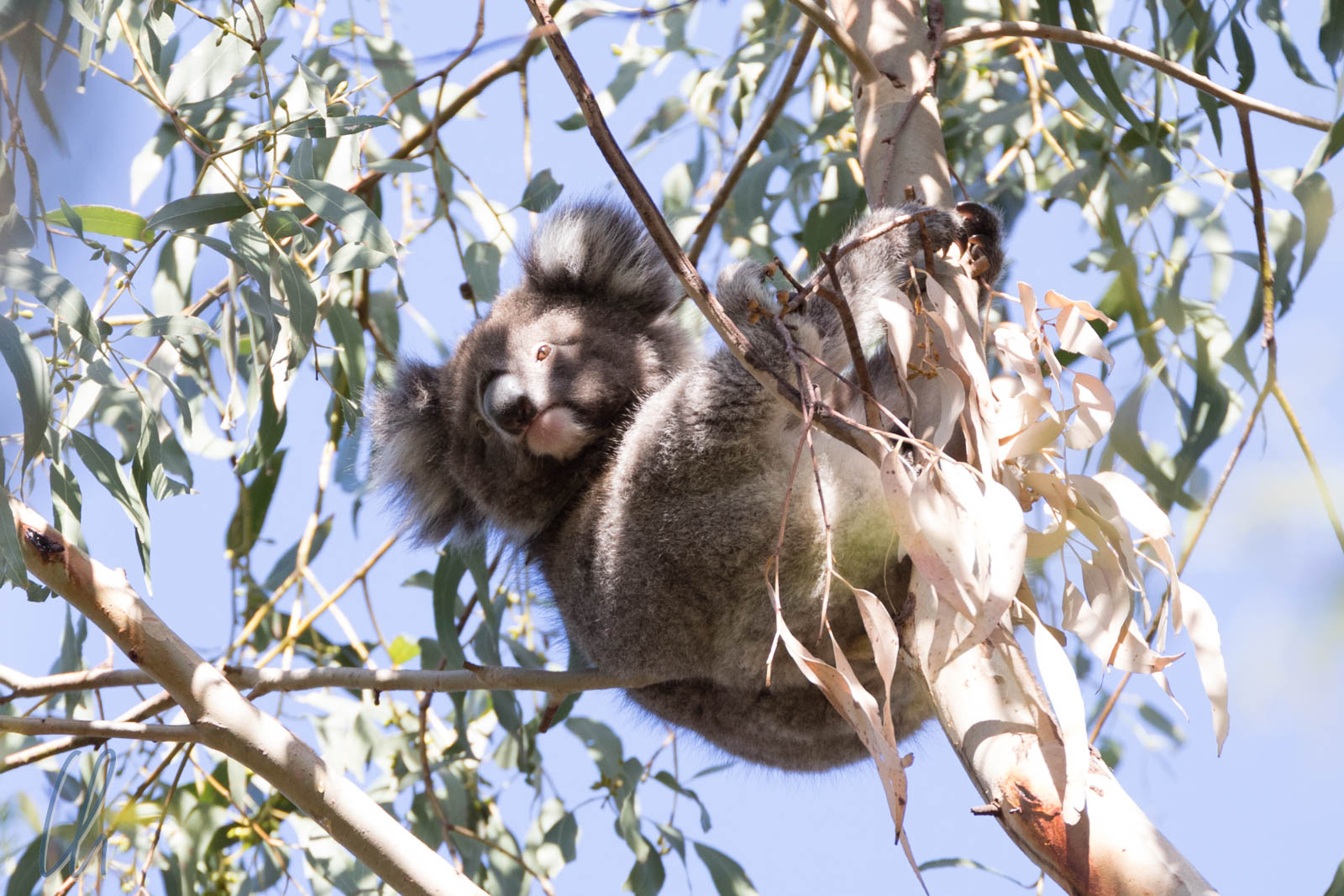
In the next section of path, you may see large eucalypts which are shaggy at their base, but with clear pale trunks above. These are Manna gums, which form part of the food source for koalas. On a smaller scale, consider how many tiny creatures may call the bark home. Do you think that these trees are natural, or a result of revegetation by volunteers?